Craft Tutorials
The Natural Dye Garden: Growing Color in Your Backyard
By Aisha Patel
For millennia, every color in human clothing came from a plant, insect, or mineral. The rediscovery of natural dyeing is more than nostalgia — it's a return to a slower, more intentional relationship with color.
Starting Your Dye Garden
You don't need a large space. A few containers on a balcony can produce a remarkable palette. Here are the foundational plants for a beginner's dye garden:
Yellows and Golds
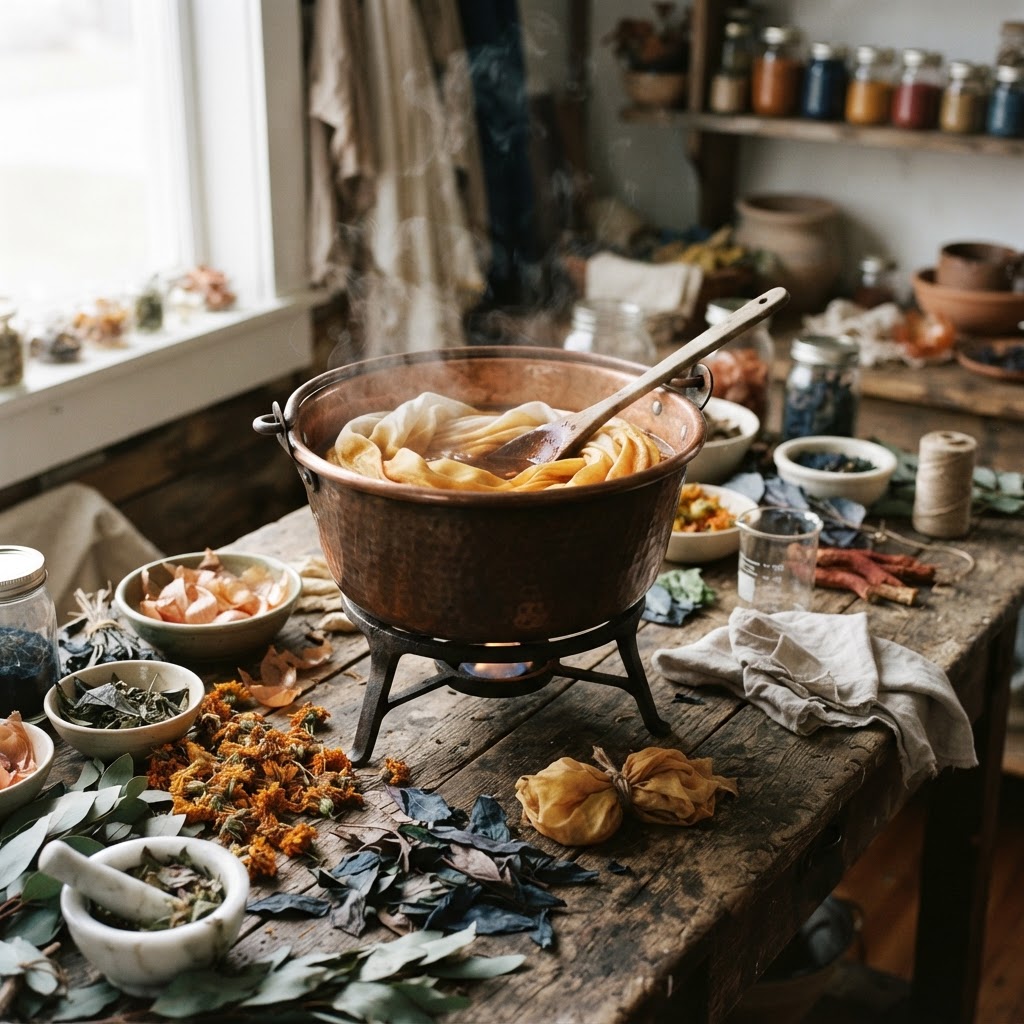
Marigold — Produces vibrant yellows to deep golds. Easy to grow, prolific bloomer. Harvest the flowers at their peak and dry them for year-round use.
Blues
Indigo — The holy grail of natural dyeing. True blue is rare in nature, and indigo is one of the few sources. It requires a fermentation vat, but the color is unmatched.
Reds and Pinks
Madder root — Produces a range from soft coral to deep brick red. The roots need 2–3 years to mature, but the color is worth the wait.
The Dye Process
- Mordant your fiber — Soak natural fibers (cotton, linen, wool, silk) in a mordant like alum to help the dye bond permanently.
- Extract the color — Simmer plant material in water for 1–2 hours. Strain out the plant matter.
- Dye the fiber — Submerge your mordanted fiber in the dye bath. Heat gently — never boil.
- Rinse and dry — Rinse in cool water until it runs clear, then hang to dry away from direct sunlight.
"The beauty of natural dyeing is that you never get the same result twice. The same marigold flowers, the same process, a different day — and the color shifts. It's alive in a way synthetic dye can never be."
Embracing the Unexpected
Natural dyes are unpredictable. The pH of your water, the mineral content of your soil, the age of the plant — all of it affects the final color. That's not a bug; it's the whole point. Each dyed piece is a collaboration between you, the plant, and the moment. We celebrate the variation and "imperfection" of naturally colored textiles, because it's a testament to their origin. Our heritage loom throws are dyed using these very methods — each one a unique expression of the season's harvest.