Behind the Scenes
From Tree to Table: The Sustainable Woodworking of Wildwood Workshop
By James Wildwood
Walk into Wildwood Workshop and the first thing you notice is the smell — fresh-cut walnut, cedar, and oak mingling in the warm air. The second thing you notice is that nothing here is uniform, and that's entirely the point.
Sourced with Intention
Founder James Wildwood sources every piece of timber from within 100 miles of his workshop. "I know the orchard, the forest, the fence line where each tree grew," he says. "When you know where the wood came from, you work differently."
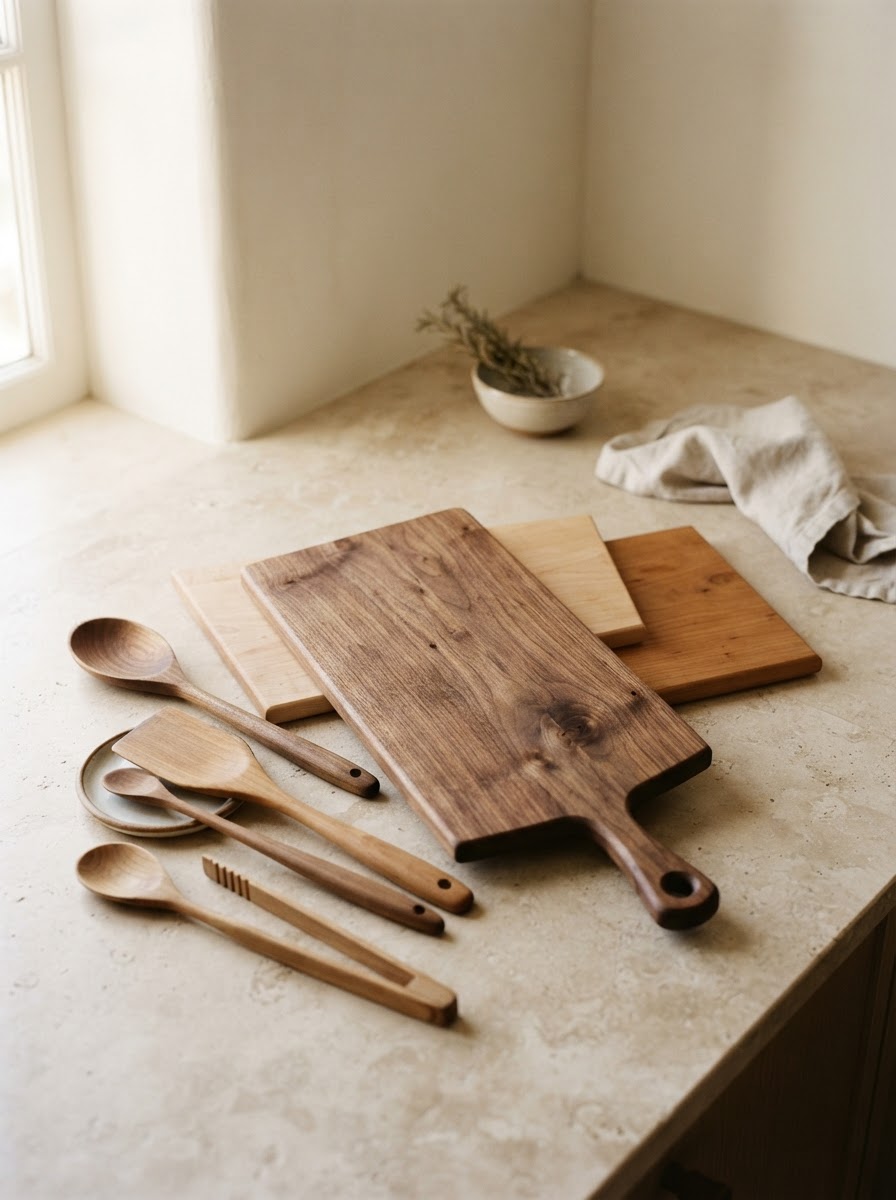
Most of his material comes from pruned orchard trees — trees that have reached the end of their fruit-bearing life. Instead of being chipped or burned, they're given a second life as serving boards, spoons, and furniture.
- Black walnut from a 60-year-old orchard in Yamhill
- Olive wood from a retired grove in Sonoma
- Cedar salvaged from a collapsed barn in Washington
The Grain Tells the Story
James doesn't just cut boards — he reads them. The grain pattern reveals decades of growth: wet years, dry years, the season the tree was felled. "A knot isn't a flaw," he insists. "It's where a branch grew. It's the tree reaching for light."
Each piece is finished with food-safe mineral oil and beeswax — never synthetic varnishes. "The wood should be touchable. You should feel the grain. If it feels like plastic, I've failed."
Tools That Last
James works almost entirely with hand tools. A drawknife that belonged to his grandfather. A spokeshave he found at an estate sale. A mallet he turned himself from a piece of maple.
"Power tools remove material fast, but they also remove the conversation between maker and material. With a hand tool, you feel every grain reversal. The wood tells you where to go."
The result is work that carries the unmistakable texture of the human hand — slight undulations, tool marks that catch the light, edges that are sharp but never machine-perfect.